|
Heavy snowfall, while it creates a serene winter scene, can be a serious challenge for your roof. Find out what you need to know about the impact of snow on your roof and when to take action.
After a winter storm rolls out, it’s not just your driveway and walkways that will need attention—your roof might as well. Heavy snowfall can quietly pile up, adding a surprising amount of weight. Knowing how much snow is too much and when to clear it can make all the difference in keeping your home safe.
Why Heavy Snow is a Roof Concern
Snow may look like a cozy blanket draping your home, but it adds real weight that can pose a risk as it starts to accumulate. A typical residential roof can withstand quite a lot of that weight, usually around 20 lb per square foot of snow. This is roughly the equivalent of 4 feet of fresh, fluffy snow or 2 feet of old, compacted snow. Any more than this, however, and you could be risking roof damage.
And it’s not just sheer weight that can be a problem. If snow is left on your roof, the freeze-thaw cycle can cause snow to melt, refreeze along your roof edge, and form ice dams, potentially leading to leaks and structural problems.
When Should You Worry?
You don’t need to rush to clear your roof after every little snowfall. The key is to keep your eye on the build-up and act if it reaches a certain threshold. Roofing experts recommend getting out and clearing it if more than one foot of snow has accumulated on your roof. However, keep in mind that even less accumulation can approach risk if the snow has compacted over multiple snowfalls or is laying overtop layers of ice.
Clear signs that the snow and ice on your roof are pushing it beyond what it can safely support include visible ice dams along roof edges, creaking noises, and bulging or drooping rooflines. Inside, leaks and water stains indicate roof damage and possibly structural issues.
Roof Snow Removal Tips
Here are safe and smart ways to manage removing heavy snow from your roof:
- Avoid dangerous tools: Don’t use tools like picks or metal shovels on your roof, as these can damage roofing material and loosen shingles. They also won’t remove the snow safely.
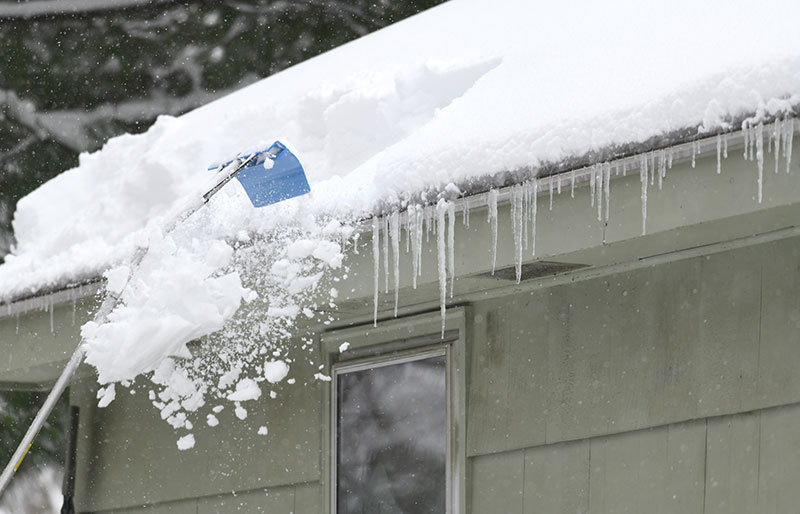
- Use a roof rake: A telescoping roof rake is the perfect tool for removing snow in a safe manner and with your feet firmly planted on the ground. Begin at the edges and pull snow down in manageable chunks.
- Leave a little snow: Don’t strip the roof totally bare while you work. Leaving a shallow layer will help prevent roof damage.
- Hire professionals when needed: If your roof is steep, high, or just has too much snow and ice to manage safely, then it’s better to bring in the pros. Don’t risk slips, falls, or damage to your roof by trying to do it yourself in unsafe conditions.
Heavy snowfall is not just a minor annoyance; it can also compromise your roof. But if you watch for signs, act when needed, and use the right snow removal methods, you can help prevent major damage and avoid costly repairs.
|