|
Cold mornings have a way of revealing issues that stayed hidden during warmer months, and one of the most common is the low tire pressure warning light. Many drivers see it appear for the first time in winter and wonder whether it signals a serious problem or just a seasonal nuisance. Understanding what this warning really means, how cold weather affects your tires, and when professional attention is needed can help you stay safe, protect your vehicle, and avoid unnecessary wear during the colder months.
Why the Light Shows Up on Cold Mornings
A low tire pressure warning in winter is often triggered by temperature changes rather than a puncture or tire failure. As air cools, it contracts, causing tire pressure to drop even when the tire itself is in good condition. A common rule of thumb used by technicians is that tire pressure drops by about 1 psi (roughly 7 kPa) for every 5°C decrease in temperature. A sudden overnight temperature drop can easily be enough to trigger the warning light.
For example, if your tires were set correctly in milder conditions and temperatures fall significantly overnight, the pressure can drop several psi by morning without any air actually escaping from the tire.
What the System Is Actually Measuring
Vehicles are equipped with one of two types of tire pressure monitoring systems.
Direct TPMS uses a sensor mounted inside each wheel, typically attached to the valve stem or banded to the wheel. These sensors measure actual air pressure inside the tire and often monitor internal temperature as well. Depending on the vehicle, the system may identify exactly which tire is low. Direct systems are generally more precise, but the sensors rely on internal batteries that eventually wear out.
Indirect TPMS does not measure air pressure directly. Instead, it uses wheel speed sensors from the braking system to detect differences in tire rotation speed. A tire with lower pressure has a smaller rolling radius and rotates faster than the others. While effective, indirect systems can be affected by uneven tire wear, mixed tire brands, incorrect tire sizes, or skipped recalibration after a tire rotation or seasonal wheel change.
Why Cold Inflation Pressure Matters
The tire pressure listed on the driver’s door placard is intended to be set when the tires are cold. Cold means the vehicle has been parked long enough for the tires to reach ambient temperature. Checking or adjusting pressure after driving can give a false reading because warm tires naturally show higher pressure.
Tires also lose small amounts of air over time through normal permeability. This gradual loss is usually unnoticed during warmer months, but winter temperature drops amplify the effect. A tire that was already slightly low can easily fall below the threshold that triggers the warning light once colder weather arrives.
The Real Risks of Driving Underinflated
Low tire pressure affects more than just the dashboard display. Underinflated tires flex more as they roll, which increases heat buildup and accelerates wear. Rolling resistance also rises, increasing fuel consumption.
In winter conditions, underinflation can reduce braking effectiveness, dull steering response, and compromise traction. Tread blocks do not contact the road as evenly as designed, which is especially noticeable on cold pavement and slippery surfaces. Over time, driving with low pressure can also lead to internal tire damage that is not visible from the outside.
How to Tell a Temperature Drop from a Leak
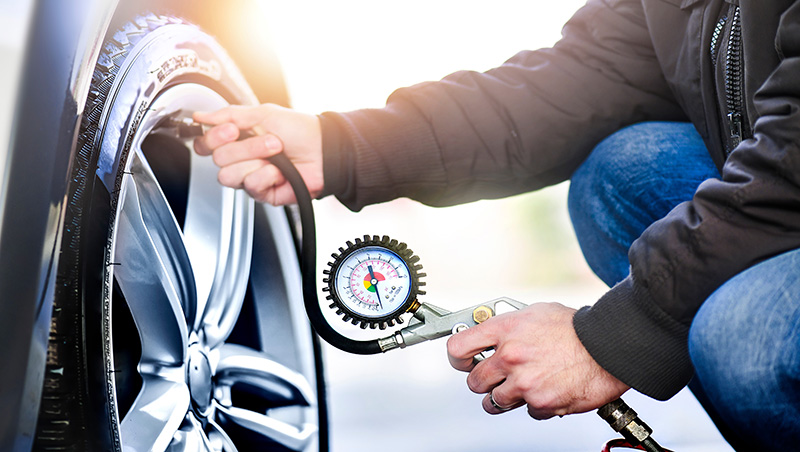
Start by checking all four tires with a quality pressure gauge when the tires are cold.
A temperature-related drop is likely if all four tires are low by a similar amount, the warning appears during cold mornings, and pressure stabilizes after topping up.
A leak is more likely if one tire is significantly lower than the others, pressure continues to drop after inflation, or the warning returns within a day or two. Valve stems are a common culprit in winter, as rubber can stiffen and crack with age, especially in freezing conditions.
Common Winter Triggers People Miss
Large temperature differences between a warm garage and cold outdoor parking can cause unexpected pressure drops. Seasonal wheel swaps may require the system to be relearned or recalibrated. Aging TPMS sensor batteries can cause intermittent warnings. Corrosion at the tire bead or around the valve stem can create slow leaks that only become noticeable in winter. Snow and ice buildup can also interfere with indirect systems that rely on wheel speed data.
Best Practice When the Warning Comes On
Check tire pressures as soon as possible when the light appears. Inflate all tires to the pressure listed on the door placard, not the maximum pressure shown on the tire sidewall. Inspect the tread and sidewalls for damage, and do not forget to check the spare tire if your vehicle has one. If the warning returns after proper inflation, a professional inspection is recommended.
When a Service Visit Makes Sense
A service appointment allows technicians to perform a full tire and TPMS evaluation. This can include pressure verification with calibrated equipment, leak testing, valve stem and core inspection, bead resealing if needed, and electronic checks of TPMS sensor health. If wheels were recently changed or rotated, the system can also be properly relearned so it functions correctly for the rest of the season.
The Bottom Line
In winter, low tire pressure warnings are often the result of temperature changes, but they should never be ignored. Maintaining proper tire pressure improves safety, protects your tires, and helps your vehicle perform as intended throughout the colder months. Addressing the warning early can prevent minor issues from turning into costly repairs.
Click the button below to book a service appointment.
Please Note: The details of this article were accurate at the time it was written. Manufacturers may change the details of any vehicle’s specifications at any time without notice.
|