|
Learn how to safely transport your summer watercraft, from boats and jet skis to kayaks and paddleboards, with practical tips for securing, towing, and protecting your gear on the road.
Looking forward to getting out on the water this summer? There are many different types of watercraft to consider, and just as many different options for transporting them. Whether you already know which type you are going to use or are trying to decide on the best one for you, knowing how to get it from your driveway to the dock in a safe and efficient manner is key.
Boat
Moving a boat requires a properly matched trailer and towing vehicle. The trailer needs to be rated for the full weight of the boat, including gear, accessories, and fuel. Your vehicle also needs to have the proper towing capacity for the job.
Once it’s loaded, secure the boat with strong tie-down straps at both the stern and bow. The winch line also needs a tight connection to the bow line to keep everything firmly in place. Before leaving, make sure you check that the trailer lights are working, tires are properly inflated, and the hitch and safety chains are secure.
Inflatable Boat
Inflatable boats can also be transported with a trailer; just avoid over-tightening the straps, as this can cause damage to the material. You want the tubes secured but not compressed. Deflating and packing the boat may be a better idea for longer distances to prevent wear and damage during transport. Packing it up will also prevent wind resistance and improve your fuel economy while driving.
Jet Ski
Jet skis are a bit easier to manage than larger boats and can be transported on smaller trailers, but securing them properly is just as important. Because they are lighter, they can be prone to bouncing around if not secured tightly enough. Use tie-down straps at the rear and ensure the bow is firmly attached to the trailer winch.
Kayak or Canoe
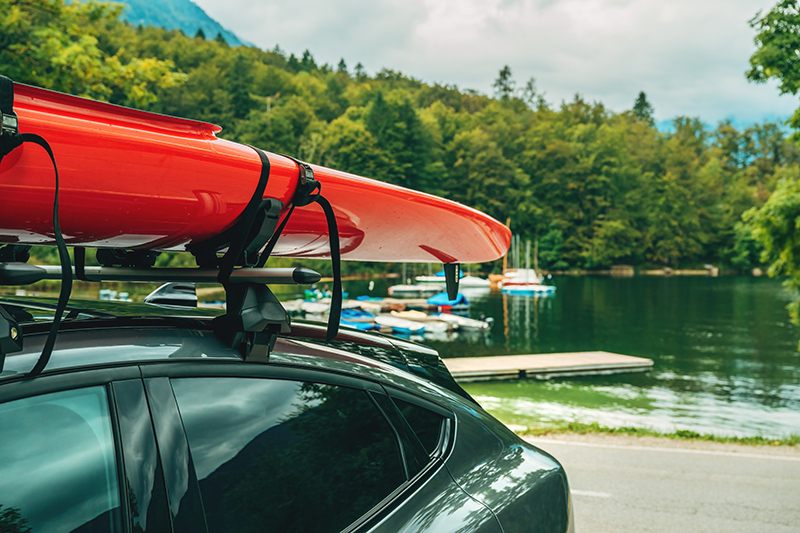
If you’re taking a kayak or canoe on the water, then you’ll want to use a roof rack. A proper rack system is essential for providing either watercraft with a stable base for safe transportation. Use straps to secure the kayak or canoe across the rack and add bow and stern lines to prevent movement and keep it stable in crosswinds. The craft should sit centered on the rack, with even overhang at the front and back.
Paddleboard
Like kayaks and canoes, paddleboards can be transported on a roof rack. Note, however, that the flat shape makes paddleboards more susceptible to catching wind, so they need to be very tightly secured. Wide straps are ideal for distributing pressure evenly, and bow and stern lines will provide that extra stability.
General Safety Tips
No matter what type of watercraft you are transporting, a few safety tips apply across the board. First, always double-check your setup before driving off to make sure everything is secure. If there is any loose gear inside your watercraft, make sure to secure it as well. When driving, adjust for the extra weight and size by accelerating gradually, braking earlier, and making turns more carefully.
The water is waiting, but first, you have to get there. Set yourself up for an enjoyable adventure by starting with a smooth trip.
|