|
All-season tires offer reliable performance on the road during the warmer seasons of the year. If you’re in the market for a new set, then here’s what you need to know to make the best choice.
In Canada, all-season tires are a bit of a misnomer, as they are generally not a substitute for dedicated winter tires in freezing cold or heavy snow. But they are engineered for balanced performance across dry, wet, and mild conditions during the warmer months and shoulder seasons. All-season tires are made from a rubber compound that’s softer and more flexible than a summer-only tire, yet firmer than a winter tire.
Choosing the right all-season tire will make a noticeable difference in your everyday driving, whether you are cruising down sunny summer roads or navigating rainy highways. However, even when marketed as “all-season,” not all tires are the same, so it pays to pay attention while shopping.
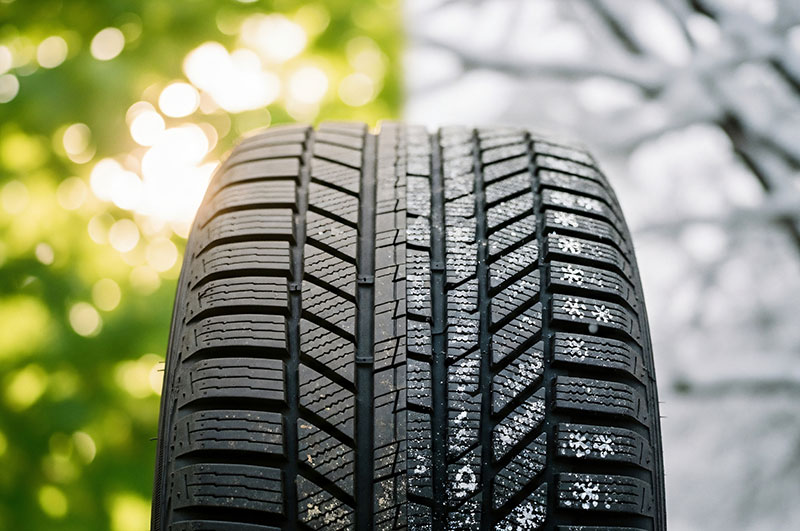
When picking a new set of tires, one of the most visible and important features to evaluate is the tread pattern. A good all-season tire will have deep grooves and channels for moving water away efficiently, helping to reduce the risk of hydroplaning in rain. Look for tread designs that also support dry traction and stability, like asymmetrical patterns that balance water repulsion and surface grip.
Speaking of tread, treadwear is a key metric that tells you how long a tire might last under normal driving conditions. Higher treadwear grades generally mean a longer life. Note that real-world conditions, like driving style and road surfaces, can mean these ratings won’t necessarily be exact, but they do offer a good point of comparison between different tires.
Taking a look at the sidewall of a tire can also give you some important information, as tires are stamped with various markings indicating what they are designed for. For example, many all-season tires carry the M+S (Mud + Snow) designation, indicating they’re engineered to handle basic mud and light snowy patches. But remember that this doesn’t mean that they are optimized for winter driving.
The Three-Peak Mountain Snowflake (3PMSF) symbol, which is found on all dedicated winter tires, can be found on some all-season tires as well. While this does mean that the tire is designed and tested for performance in snow, most Canadians would be much better served by proper winter tires for safe driving in our extreme winter conditions.
Make sure, as well, that you match your tire choice to your vehicle and how you drive. All-season tires come in versions tailored for passenger cars, SUVs, trucks, and even electric vehicles, each with specific compound and construction considerations to handle vehicle weight and performance demands.
Finally, when it comes to choosing a new set of tires, some often overlooked but important features to consider are noise level and rolling resistance. Quality all-season tires frequently include designs that reduce road noise and improve ride comfort, making long drives less fatiguing. Some even optimize rolling resistance, which can help with fuel efficiency, especially on longer highway trips. If you spend a lot of time on the road, these comfort and efficiency factors can be just as important as grip and treadwear.
A good set of all-season tires will help you drive confidently through spring, summer, and fall for several years to come. Armed with the right know-how, you’re all set to make the best choice.
|